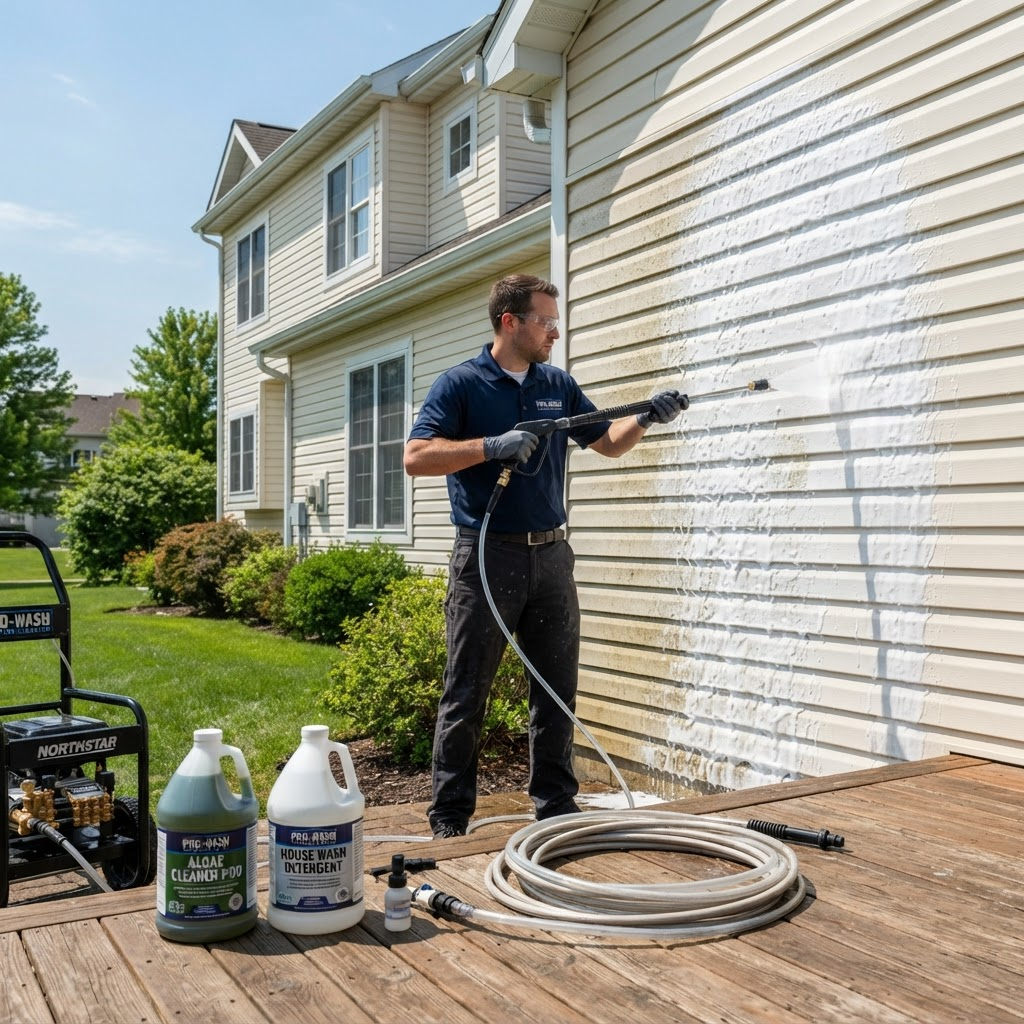
How to Safely Use a Pressure Washer: A Homeowner’s Guide
Pressure washers are powerful tools that can cause real damage and injury if used incorrectly. Here’s how to clean effectively while staying safe and protecting your surfaces.
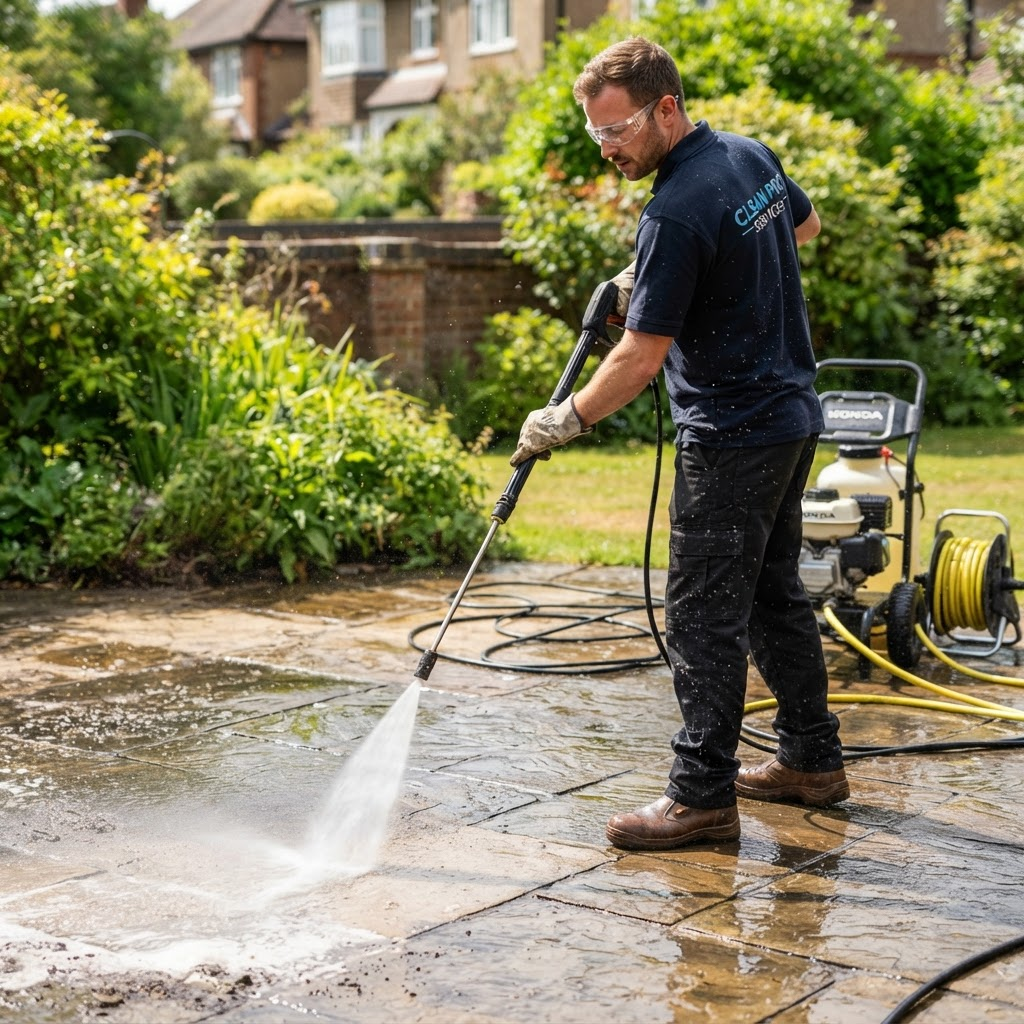
A pressure washer can make quick work of dirt, grime, and algae — but it also generates enough force to strip paint, gouge wood, crack windows, and cause serious injury. Understanding how to operate one safely is just as important as knowing how to point it at a dirty surface.
Understand the Power You’re Working With
Pressure washers are rated by PSI (pounds per square inch) and GPM (gallons per minute). A residential unit typically runs 1,300–3,100 PSI. At close range, even a mid-range machine can break skin, so a pressure washer should never be treated like a garden hose.
Never point it at people or pets
The stream from a pressure washer can cause deep lacerations and inject water and debris under the skin. Always keep the spray aimed at the surface you’re cleaning, and keep bystanders well clear of the work area.
Wear the Right Protective Gear
- Safety glasses or goggles to protect against flying debris and back-spray
- Closed-toe, non-slip footwear — never sandals or bare feet
- Gloves for a secure grip on the wand
- Long pants and hearing protection for gas-powered units
Choose the Correct Nozzle and Pressure
Most pressure washers come with color-coded nozzle tips that change the spray angle. The wider the angle, the gentler and safer the spray:
- 0° (red): an extremely concentrated, dangerous jet — avoid it for almost all home cleaning
- 15° (yellow): heavy-duty stripping for stubborn stains on hard concrete
- 25° (green): general-purpose cleaning for driveways and patios
- 40° (white): gentle cleaning for siding, windows, and delicate surfaces
- 65° (black soap tip): low-pressure detergent application
Always start with a wider angle and more distance, then move closer only if needed. Different materials require different pressure — the wrong setting can permanently damage wood, mortar, or painted surfaces.
Follow Safe Technique
- Test on a small, inconspicuous area first to confirm the surface can handle the pressure
- Keep the nozzle 15–24 inches from the surface and adjust as needed
- Spray at a slight angle rather than straight on to lift dirt without driving it in
- Work in smooth, overlapping strokes to avoid streaks and “zebra striping”
- Keep both hands on the wand — it can kick back when you pull the trigger
Mind Ladders, Heights, and Electricity
The recoil from a pressure washer makes using one on a ladder extremely dangerous — this is a leading cause of pressure-washing injuries. For second-story siding or hard-to-reach areas, use an extension wand from the ground or hire a professional. Keep the spray well away from electrical outlets, meters, light fixtures, and overhead power lines.
When to Call a Professional
If a job involves heights, delicate surfaces, heavy staining, or large areas, the safest and most cost-effective choice is often to hire a professional. At King’s Castle Home Services, our team is fully insured and trained to match the right pressure, technique, and cleaning solution to every surface — protecting both your property and your safety.
Need professional exterior cleaning services?
If you need professional exterior cleaning services, get in touch with King's Castle Home Services. We proudly serve Toronto and the Greater Toronto Area (GTA).